
Giving and receiving notes is one of the hardest parts of learning improv. This page has everything I’ve put together on the subject: a full article, downloadable guides, and all of the Your Improv Brain episodes (video and audio) about notes in one place. Looking for the Guides and Worksheets? Find them here.
Giving and receiving notes in improv
Getting notes after a scene is where most of the learning happens in improv. A coach watches you do something, tells you what they think, and you take that information and figure out what to do with it. That process sounds simple… but it really isn’t.
Notes in improv are feedback on hard mode. In other learning contexts, there is a bit more separation between the performer and the material. Improv is quite personal because you made it up. All the make ’em ups came from you.
When we perform, we’re asked to get out of our heads and not think or analyse what we’re doing. That’s the ideal state, to reduce or eliminate our inner critic. But then the scene is over and it’s time for notes, and we re-engage our analytical brain and shift from “don’t think, just GO” to “here’s what you should change.” That’s difficult for anyone, and especially difficult for learners at a craft that is already filled with emotion and difficulty.
The group setting adds another layer, because everyone else in your class hears your notes too. When we’re receiving these notes, we’re filled with adrenaline and anxiety, so receiving analytical feedback while our brains are in that state is feedback in hard mode.
All resources on notes for students and teachers
I’ve done a three-part podcast series and an episode on processing feedback that cover this in depth. I’ve also put together downloadable guides for students and for teachers. This article is the overview, but the guides go deeper, and you can find everything on this page.
The two layers of every note
Every note has two layers. The content is the actual information: what happened in the scene, what could change, what the coach observed. The framing is everything else: their tone of voice, whether they seem frustrated or supportive, whether the note is specific or vague, personal or for the group. Your inner critic might even add its own spin before you have finished hearing the note.
Your nervous system processes the framing before your conscious brain processes the content. By the time you’re hearing the words, your body has already decided whether this feels safe or threatening, and then your memory retains that incorrect information. You lose the content because the framing got there first.
Processing notes is a metacognitive skill. You are learning to think about your own thinking, intercepting emotions before they overwrite the actual note.
What the guide and workbook for students covers:
- Why vague notes are challenging, and how to figure them out
- A mental model to sort notes into
- Sorting out WHY you feel the way you do about notes (and how to deal with it)
- What to do when different teachers send you contradictory notes
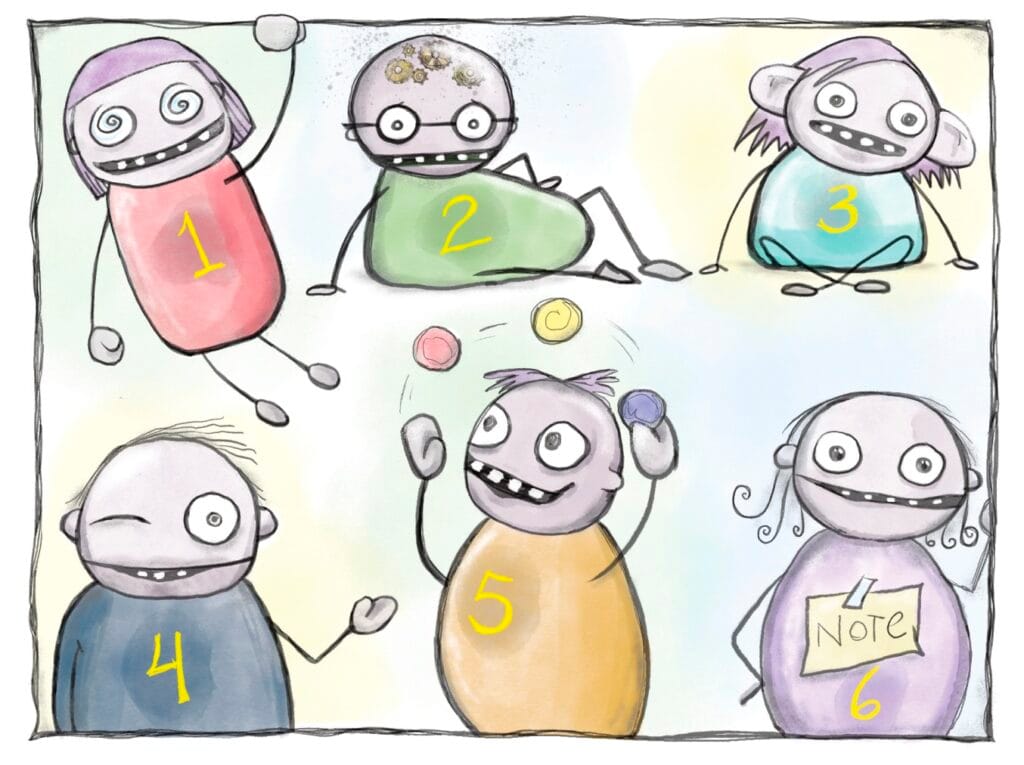
- Figure out what kind of “brain on notes” you have
- A workbook that includes 3 worksheets for your notes, and before/after class prep
I go into much more detail on this in the podcast episodes and in the downloadable guides below. The guides also include strategies for what to do in the moment and what to do after class, along with worksheets for tracking your notes and your patterns over time.
If you have issues with notes, this guide and the workbook will help you with your overall experience with these sessions.
For teachers and coaches
Guide coming soon in March 2026! How you deliver a note shapes how it lands before the student has even processed the words. Your tone, your specificity, whether you give the note publicly or privately, whether you normalise follow-up questions, how you structure your sessions, and understanding how student brains process the info: all of it affects whether the student hears the content or gets stuck in the framing.
I’ve put together a separate guide for teachers and coaches that covers this in detail. You can download it below.
PDF Guides and Workbooks
NEW in March 2026! Comprehensive guides about notes in improv through the lens of how student brain processes and reacts to the notes session of class, and how teachers can structure sessions, and make notes more effective for those brains. These guides also feature unhinged hand drawings by Jen.
Processing Notes in Improv: A Student’s Guide and Workbook
This 25-page comprehensive Guide and Workbook is an extensive look at your brain on getting notes (feedback) in improv sessions as a student. If you learn how to hear and process notes better in these sessions, you become a better improviser.
It covers why notes are so hard to process, what your brain is actually doing when you receive feedback after a scene, and what to do about it. There are frameworks for separating the useful information from the emotional noise, strategies for both during class and after, a section specifically for neurodivergent brains, and worksheets you can use after every session to track your notes and your patterns over time. The worksheets are also offered as separate downloads you can print or fill in digitally (interactive PDFs).
Processing Notes: Students Guide
25 Page Guide (with drawings!) and Workbook for improv students. 3 bonus interactive downloads linked in the workbook, too. Get both guides for a discount.
Get the Guide & Workbook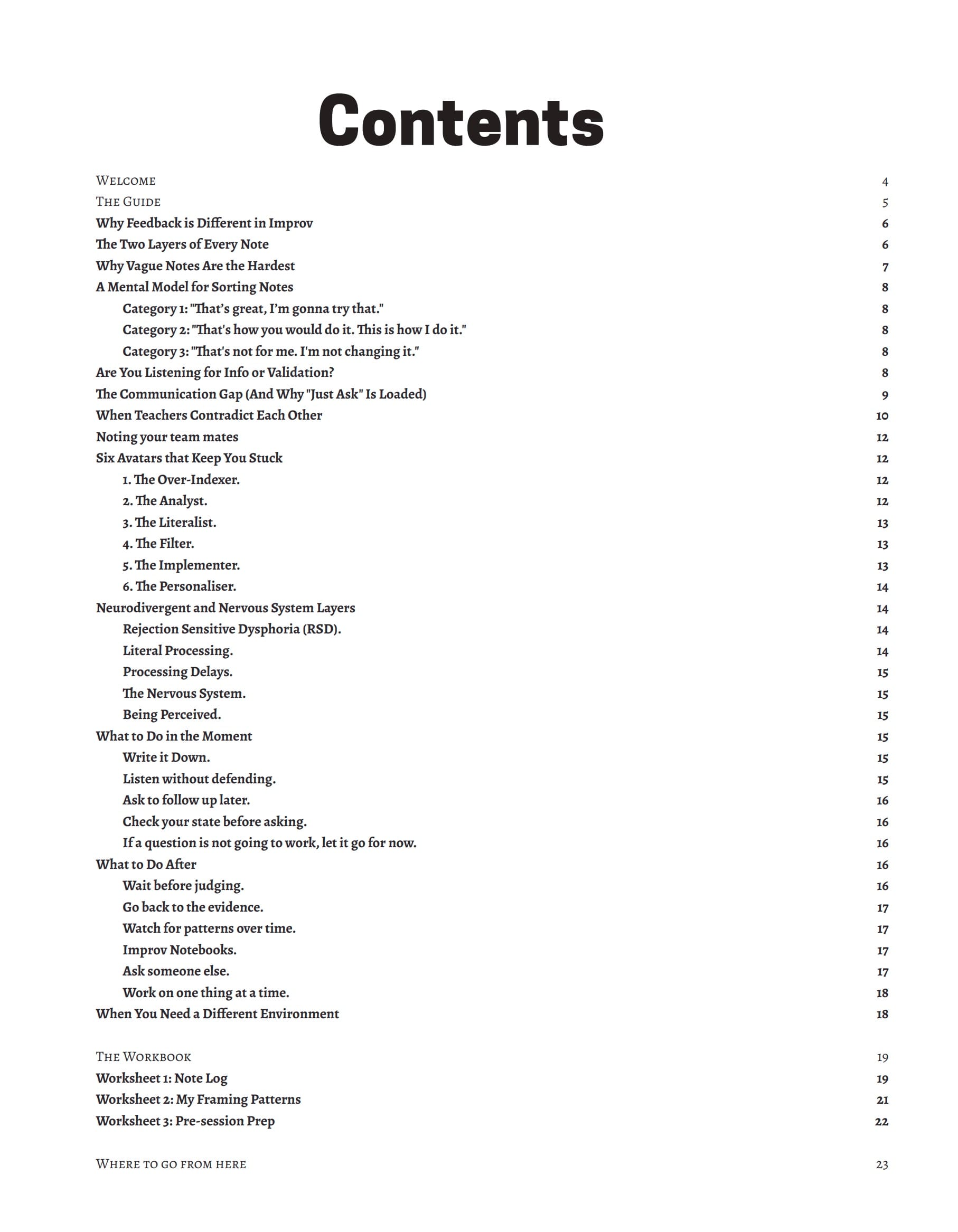
Notes They Can Actually Hear: A Guide for Teachers and Coaches
A companion guide covering how note delivery affects comprehension, why specificity matters, normalising delayed questions, and a direct reference for inclusive note-giving.
This is a comprehensive look at how your students process notes and how you can structure the session to be more effective for everyone you teach. Do you know 1 in 5 of your students are neurodivergent? 10% have difficulty processing emotions in scenes? And another 10% handle communication completely differently? Now you do, and this guide covers how to work with that, specifically.
I think this one fills a gap that I genuinely haven’t seen anyone else fill. It covers what’s happening inside your students’ brains during notes that you can’t see from the outside. The double empathy problem (which might reframe some confusing interactions you’ve had in your classroom), rejection sensitivity, processing delays, literal processing, alexithymia (which affects how about 10% of your students handle any exercise or note involving emotions), and practical adjustments you can make to how you deliver notes and structure your sessions.
If you teach or coach improv, you have neurodivergent students. You have students with ADHD, students with trauma histories, students who process feedback in ways that can seem confusing or frustrating when you don’t have the context for what’s happening. This guide gives you that context, along with direct, simple strategies that will make your notes be heard better for every student in the room.
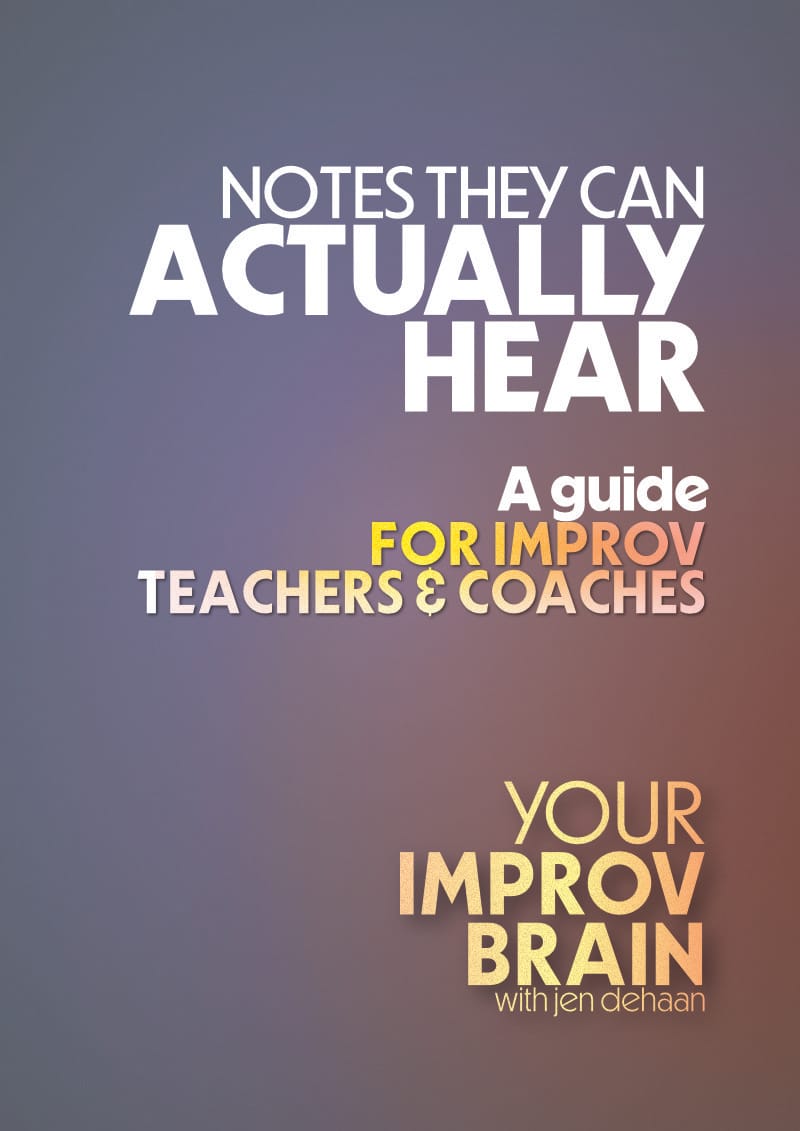
Notes They Can Actually Hear: Teachers Guide
27 Page Guide (with drawings!) for improv teachers and coaches. Get both guides for a discount.
Get the Guide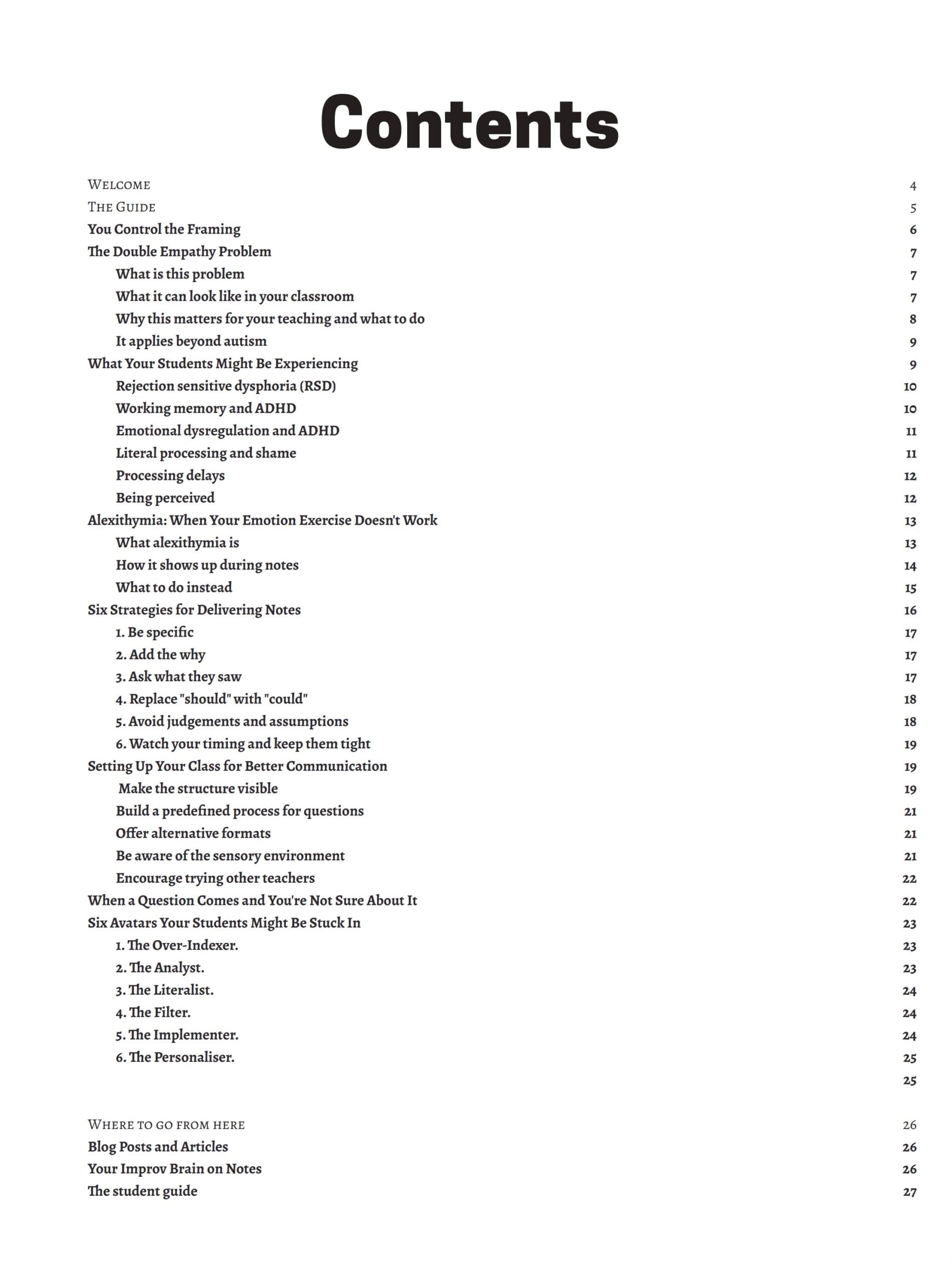
Sneak Peek: The Intro to Notes They Can Actually Hear
You know how to give notes. Maybe you’ve been doing it for years, or you’re working on it as a newer coach and have given it a lot of thought already. You might know about specificity, tone, timing, reading the room. This guide is about what’s happening on the other side of that exchange, inside the brains of your students, that you probably can’t see. Or, you notice a reaction or get a question that is confusing to you and you have no idea where it came from.
Some of your students are neurodivergent. Statistically, in any improv class, some of them are autistic, have ADHD, or have another neurological profile that changes how they process feedback. Such as C-PTSD, alexithymia, or an auditory processing challenge. Many of them don’t have a diagnosis, or perhaps they don’t know themselves. But the way their brains handle notes is different (and often not a deficit or disability, either), and the gap between what you said and what they heard can be enormous.
Other students carry the effects of complex trauma, depression, or anxiety into the classroom. These are not niche cases… they are the humans actually in your class. Supporting these students by understanding their experience will improve your teaching, their learning, and the scenes that follow.
This guide covers what these students experience during notes, why some of your best teaching habits can accidentally make it worse, and what you can adjust. Most of these adjustments are small and easy to apply to your sessions. Some of them will improve how your notes land for every student in the room, regardless of neurotype. So they’re both inclusive, and make your communication more accessible for all improv students.
And you never have to ask your students or know about these challenges, you don’t have to assess neurotypes or wonder about conditions. You can do simple adjustments to how you deliver notes and structure to help whatever brains are in the room.
I wrote this as a companion to the student guide I published, “Processing Notes in Improv: A Guide for Students.” If you want to understand the frameworks your students are learning (content vs. framing, the three-category sorting model, the six avatars), you can find that guide on the same page where you found this one. I also cover notes in depth across several podcast episodes, which are linked at the end.
Teaching and coaching is hard. I’ve done some of both, and been a student like we all have, and I know how much teachers care about getting their notes to students in a way that helps them. I care, and that’s why I made this. This guide is for you, teachers and coaches, and everything in it comes from a place of respect for what you do.
Podcast episodes
These Your Improv Brain episodes cover giving and receiving notes in detail. Episodes 15 through 17 are a three-part series from Season 2 focused on the communication gap between neurotypes during notes. Episode 46 covers processing feedback without spiralling, including the content vs. framing framework and a useful three-category model. As new podcast episodes are released, they’ll be added to this playlist.
Video episodes
These Your Improv Brain episodes cover giving and receiving notes in detail. As new video episodes are released, they’ll be added to this playlist.
First video episode on notes coming March 2026.