Asking questions at the top of an improv scene is a fairly advanced move. And if you’re newer to improv, it can slow your scene down before it even gets started.
You’ve probably heard the rule: don’t ask questions. It comes up in most improv classes early on, and for good reason really. When you ask a question in a scene, you’re often putting the work onto your scene partner. You’re asking them to fill in the details instead of adding them yourself. “Where are we?” sounds like a reasonable thing to say, perhaps in person (like, if you don’t know). Or, a quick way to have someone in the scene define the location. But in this case you’ve just handed your scene partner the job of setting the location, telling the audience, and carrying the scene forward while you wait.
When questions do work
You can ask questions in improv, though. This rule gets broken all the time. The good questions, the ones that work, add information through the question itself. You might add a piece of information and attach a question to it. Or your scene partner might hint at something about their character and you ask them to say more about the thing they’ve already put out there.
So it can be done. You just need to learn how to do it before you start doing it. But… what about the top of the scene? Can’t you do the “good” way of asking a question when setting the base reality?
Why questions are even harder at the top
At the top of the scene, questions become trickier because you’re trying to get things up and running quickly and efficiently. Efficiency is the important thing here. You and your scene partner need to land on the same page, and there’s usually no existing information to build a well-informed question from. The scene just started, so there’s nothing (or very little) to reference yet.
So instead of asking, you can assume.
Assume shared knowledge
A much easier move at the top of a scene is to assume you already know the same information as your scene partner. This creates a sense of shared history between the characters and gets the scene moving right away. And, that shared history is useful in other ways in the scene and makes improv easier in general.
It’s the same idea behind the common early improv direction to already know each other in a scene. You’re skipping the “who are you” phase and stepping into something that already has momentum.
So, easier improv. Good for a hard day if your brain is pretty tired, less of a risk in general, and good for improv if you’re newer to the craft.
Why assuming things might feel weird in improv
Some of us have a hard time with assuming things about your scene partner’s character. I know I did… making assumptions about another person’s character felt strange to me when I started improv. I think it has something to do with justice sensitivity, and it absolutely connects to my autism. Having wrong assumptions made about me has been a constant in my life, and I didn’t want to do that to someone else. Even if it was their character. What if they had a better idea in there already about that that thing I was assuming about them?
What changed for me was understanding that my scene partner probably doesn’t know these things about their character either. We’re not supposed to be thinking ahead like that in improv. And the fun, a lot of the fun, comes from the pivot even if they DO have something loaded and ready.
Someone says something about your character you didn’t expect, and you drop what you had and go with it. That’s FUN! That pivot gave me energy once I learned to let it. If this feels weird for you right now, that makes sense. It might change as you keep going in improv.
Exercise: You look / You seem / You feel (partner)
Two players up. Player one initiates and can only begin their line with “you look,” “you seem,” or “you feel.” Player two agrees with the statement and adds to it.
Simple, quick statement but it can get the scene running fast. And you are guaranteed to add something to the scene right away and establish that base reality and connection with your scene partner’s character.
So this statement forces you to make an assumption about your scene partner right away, as the initiation. You know this person and you know one of these three things about them. It also tends to set up the activity or location almost as a side effect and you get that information for free.
Use this one as a warm up exercise (just an initiation and response), or just use it for a set number of lines to set a base reality (see how far you get in the first 3 or 4 lines), or let the scene go from there for a few minutes.
See what’s easy, and what’s hard.
Exercise: One-sided phone call (solo)
Improvise a phone conversation where you cannot ask any questions. You can only make statements based on what the imaginary person on the other end said. “I know you’re angry about the car.” “I can hear you eating soup.” (oh god no.) “Maybe that carrot split pea one you like.” (gross flavour, by the way)
You’re training your assumed knowledge muscle here (I think it’s actually in the neck, or maybe below the knee). Keep going, keep assuming things about the person you’re talking to, and you’ll build the speed you need to do it at the top of a scene with a real partner.
Assume, Don't Ask: How to Start Better Improv Scenes

Resources and downloads: https://improvupdate.com
Newsletter: https://improvupdate.com/newsletter
Top of the Scene Series
This playlist will update with the podcast episodes as they are released.
Assume, Don't Ask: How to Start Better Improv Scenes


Assume, Don't Ask: How to Start Better Improv Scenes
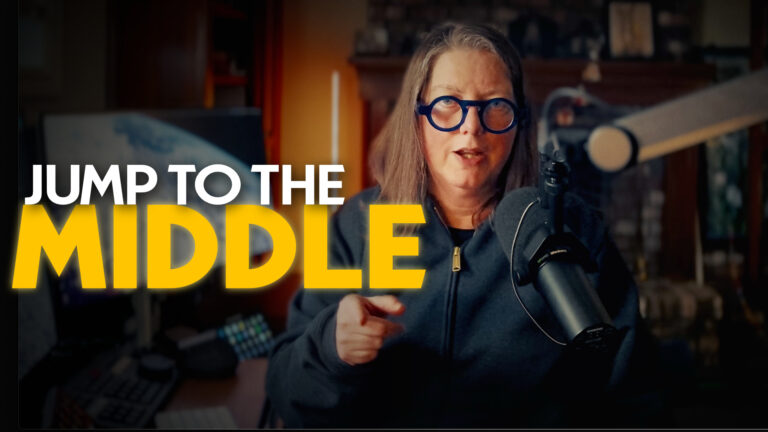
You Don't Need Backstory: Starting Improv Scenes in the Middle